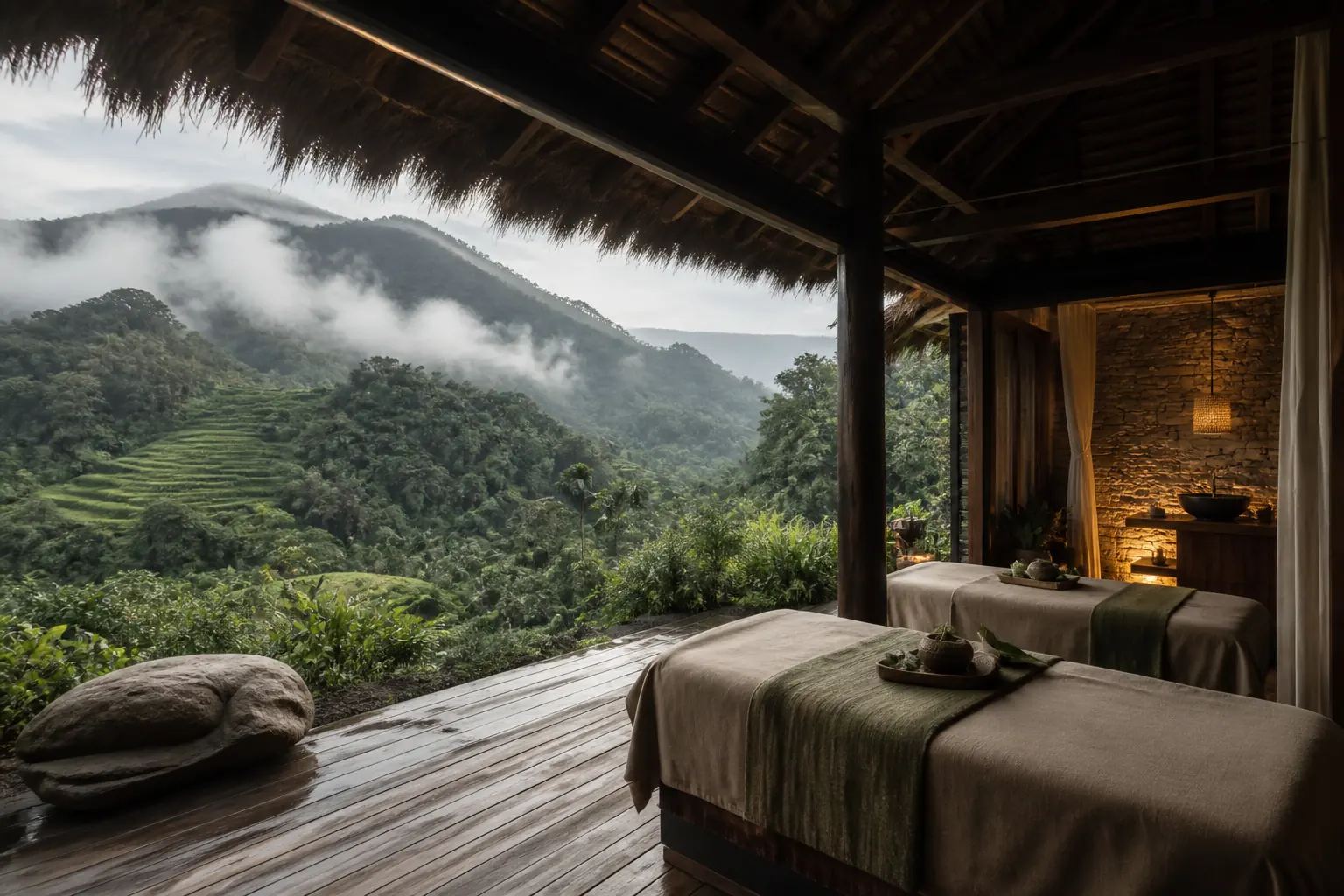
Private Wellness · Rwanda
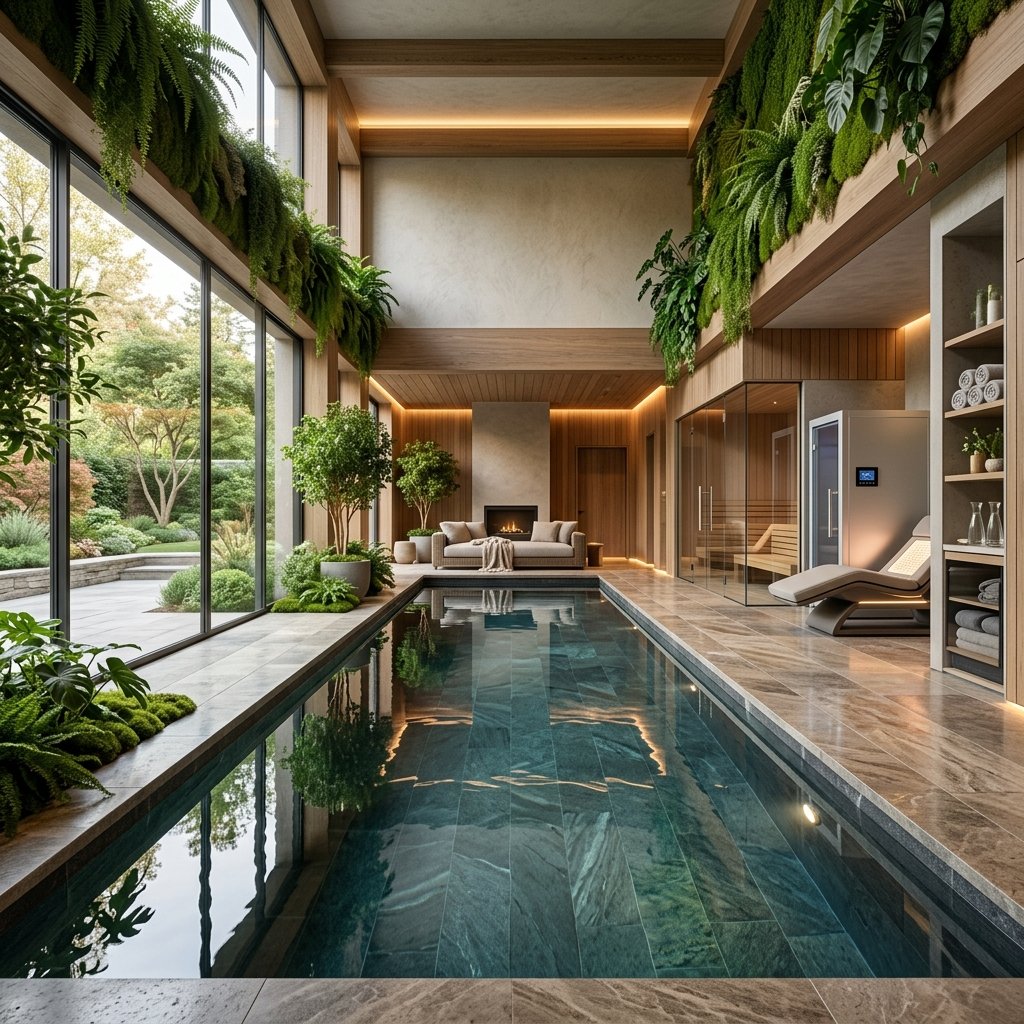
Two facts shape every private wellness project in Rwanda. It has no coastline, so equipment arrives by air into Kigali or overland from Mombasa or Dar es Salaam. And it sits high — Kigali at roughly 1,500 metres, the lodge country higher — so the climate is temperate rather than hot.
Together those invert the usual regional design problem. Heat earns its place here instead of being a contrast to it, and the supply chain decides what can realistically be specified.
This page covers both, and the use case the country actually creates: recovery after a hard day on a mountain.
Private wellness work in Rwanda splits between two settings that share a country and almost no constraints:
City services, trades within reach, and a temperate highland climate that is mild all year.
Most technologies are viable. The constraints resemble any capital: access, power quality, where the room sits in the house.
Near the volcanoes and the forest parks, higher, cooler and further from anyone who can service equipment.
Here power, water and the road in decide the specification before the brief does.
Our judgement: the mistake to avoid is specifying an up-country property as though it were a Kigali one. A device that is unremarkable in the city can be unserviceable several hours away on mountain roads.
Rwanda’s signature guest experience is physically demanding. Trekking to see gorillas means hours of steep walking at altitude, often in wet conditions, and guests arrive back tired in a way a beach guest never does.
That gives a wellness room an unusually clear job, which is worth designing around rather than filling with equipment:
A spa concept designed for a beach resort, transplanted to the volcanoes, will be half-used. Designing for the trek is both cheaper and more likely to be enjoyed.
Rwanda has no coastline. Every piece of imported equipment arrives either by air into Kigali, or overland by road from the ports at Mombasa in Kenya or Dar es Salaam in Tanzania.
That single fact shapes the programme more than any other:
We would rather specify a simpler installation that can be supported through that supply chain than a better one that cannot.
Kigali sits at roughly 1,500 metres and the lodge country is higher still. Rwanda’s highland climate is temperate rather than hot, with cool nights and a long rainy season — which inverts the usual Gulf design problem.
What that changes in practice:
I Feel Spa International advises on Rwandan projects from its UAE base with local logistics and installation partners. It is a market we are actively expanding into, and we would rather say so plainly than imply a longer local history than we have.
Tell us where the property is and how it is reached. On an up-country site, the road in shapes the equipment list.
Start Your ProjectTwo things: Rwanda is landlocked, so equipment arrives by air into Kigali or overland from the ports at Mombasa or Dar es Salaam; and it sits at altitude with a temperate highland climate rather than a hot one. The supply route shapes what can realistically be specified, and the cool climate means a heat room is used far more than it would be on the coast.
By air into Kigali, or overland by road from Mombasa or Dar es Salaam, then a final leg that on a lodge approach road may not take a lorry. We confirm what can physically reach the property before anything is ordered. Air freight often makes sense for small high-value devices and rarely for a float tank or a large plumbed item — which can decide the specification itself.
Recovery after trekking. Guests come back from hours of steep walking at altitude, often wet and tired, usually for a stay of two or three nights. Heat followed by rest, leg and passive recovery equipment, and a warm place to sit get used; a programme requiring several visits to show a result does not fit the length of stay.
Rwanda is a market we are actively expanding into, and we would rather state that plainly than imply a longer local history than we have. We advise from our UAE base, drawing on 100+ delivered spa, medical-spa and wellness projects in other markets, and local logistics and installation partners carry out the work.
 Irina Filippova
Chief Architect, I Feel Spa International
Irina Filippova
Chief Architect, I Feel Spa International
Leads interior design and architectural consultancy across I Feel Spa International’s global portfolio. Creator of award-winning spa interior concepts across Russia, the CIS and the Middle East.