Private Wellness · Tanzania

Mainland Tanzania produces three different briefs: a Dar es Salaam residence, a remote lodge or camp on the northern safari circuit, and a property serving Kilimanjaro climbers. Zanzibar is covered separately, because it has its own authorities and import route.
What separates them is not the region but how the property is powered, how it is reached, and whether it is permanent — a seasonal camp rules out almost everything plumbed, a permanent lodge rules out almost nothing.
The country also creates the clearest wellness brief we see anywhere: guests coming off the mountain.
Mainland Tanzania produces three quite different private wellness briefs. Zanzibar has its own page, because it has its own authorities and its own import route.
Residences and city properties with mains services and trades available. The most conventional of the three.
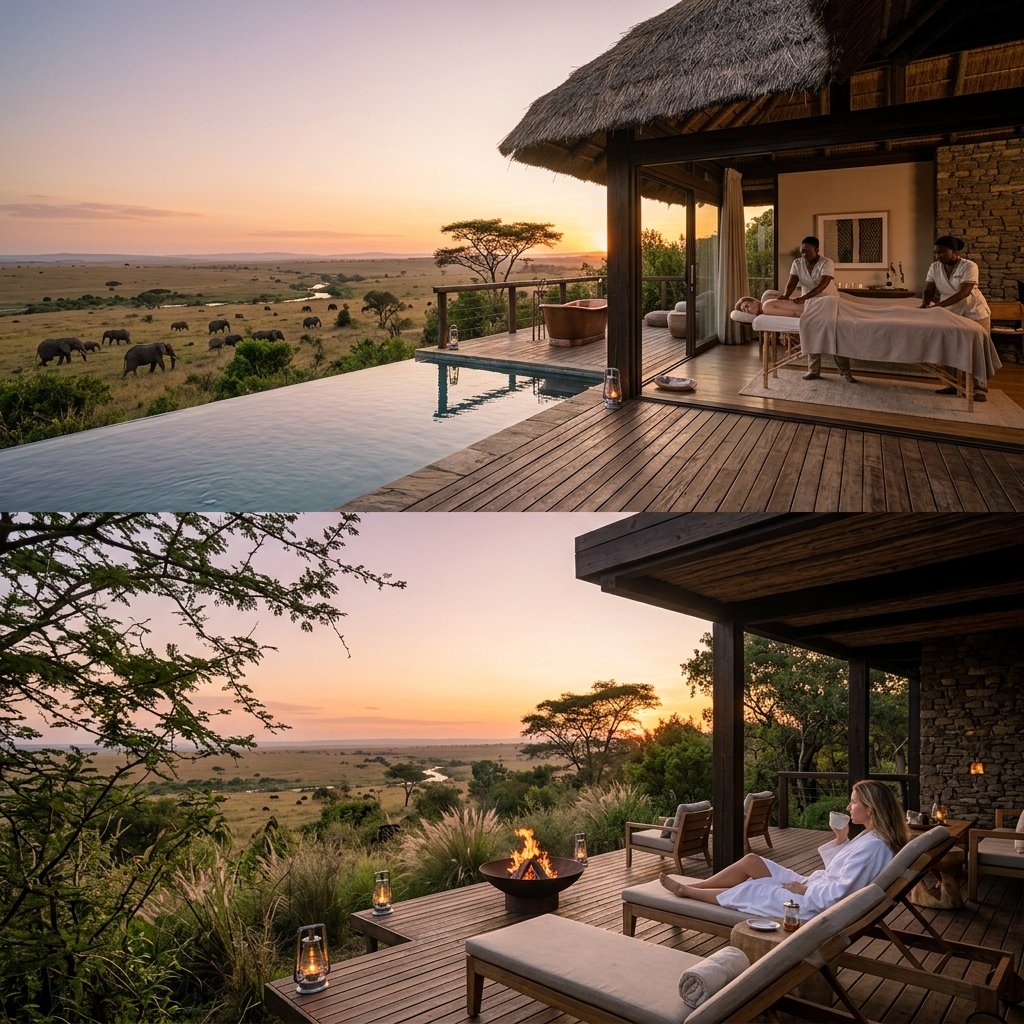
Arusha, the Serengeti and Ngorongoro. Remote, often generator-powered, and reached by light aircraft or a long drive.
Lodges and houses serving climbers, with a guest who arrives in a very specific physical state.
The useful question is not which region but how the property is powered and reached — that answer decides the specification in all three.
Guests coming off Kilimanjaro have spent days walking at altitude and arrive tired, cold and sore. It is the most clearly defined wellness need we encounter anywhere, and it is routinely under-served.
What that brief actually wants:
We would rather see a lodge spend its budget on a good heat room, hot water that does not run out and a competent massage offer than on technology that impresses in a brochure and goes unused.
Permanence decides what is possible more than budget does:
Asking which of these you have is the first question, because it removes most of the catalogue immediately in the first case and almost none of it in the second.
Freight arrives by sea at Dar es Salaam or by air, then travels inland — and the inland leg is usually what constrains the equipment list.
I Feel Spa International advises on Tanzanian projects from its UAE base with local logistics partners. For hotel, lodge and resort spa projects rather than private installations, see spa development in Tanzania.
Tell us how the property is powered, how it is reached, and whether it is permanent. Those three answers settle most of the specification.
Start Your ProjectPower, access and permanence. A mobile or seasonal camp can take free-standing packable equipment only — nothing plumbed or built. A permanent lodge can take a built heat room and plumbed hydrotherapy if power and water support it. Road conditions and the final approach decide the largest component that can physically reach the property, and light-aircraft transfer imposes its own size and weight limits.
Heat, legs and somewhere warm to sit. Guests arrive off the mountain tired, cold and sore after days of walking at altitude, and they leave within a day or two. A good heat room, hot water that does not run out and a competent massage offer serve that far better than technology requiring repeat visits to show a result.
By sea into Dar es Salaam or by air, then inland — and the inland leg usually constrains the equipment list more than anything else. Import compliance runs through the national revenue and standards bodies; we support and guide clients through those requirements rather than issuing approvals ourselves. Spares take the same route, so wear parts are held on site.
No. Zanzibar is semi-autonomous with its own regulatory authorities and its own import route, so it has a separate page. If your property is on the island rather than the mainland, that is the one to read.
 Irina Filippova
Chief Architect, I Feel Spa International
Leads interior design and architectural consultancy across I Feel Spa International’s global portfolio. Creator of award-winning spa interior concepts across Russia, the CIS and the Middle East.