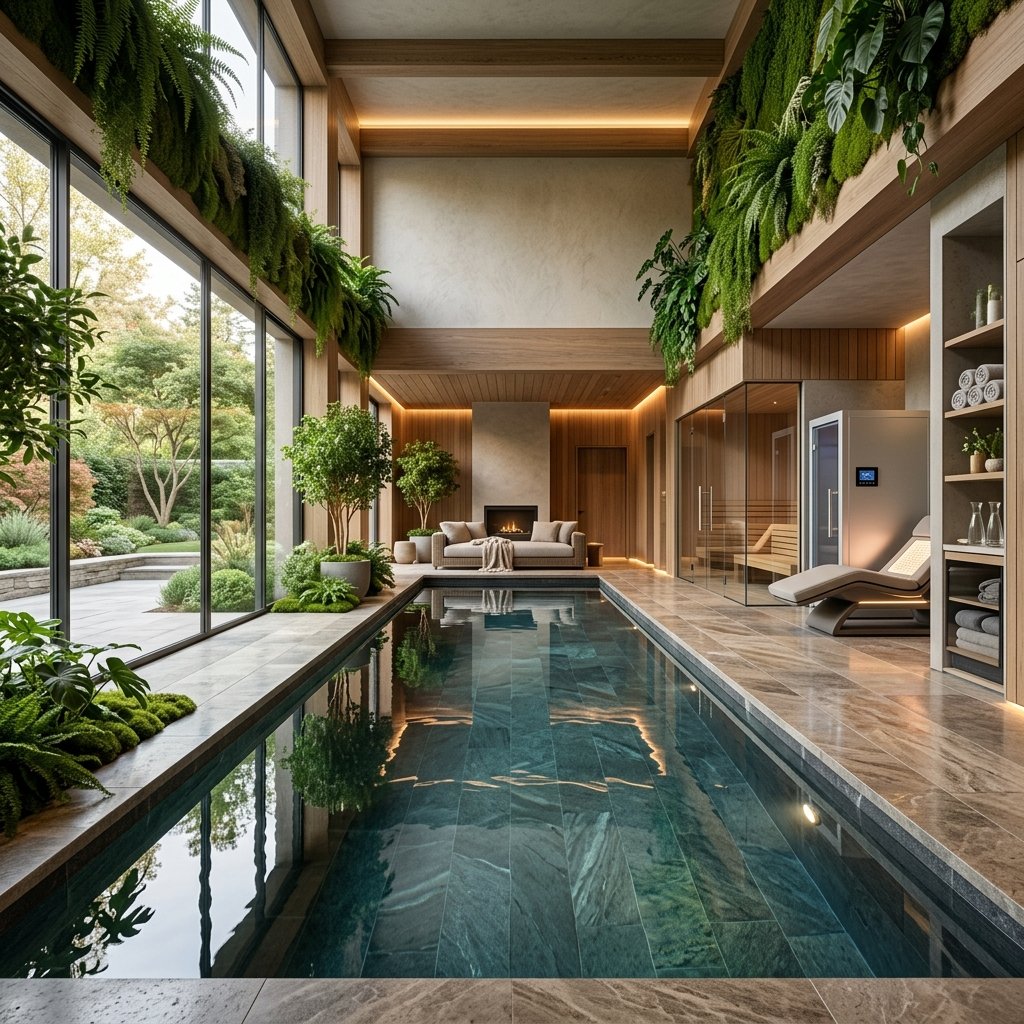
Private Wellness · Oman

Oman does not behave like the rest of the Gulf. A villa in Muscat, a property at Jabal Akhdar around 2,000 metres, and a house in Salalah during the khareef monsoon are three different design problems.
The mountain is cold enough in winter that a heat room is used for an entirely different reason. Dhofar spends months of the year humid while the rest of Arabia bakes.
This page is about designing for where the property actually is, rather than for a regional average that fits none of them.
Oman is unusual in the Gulf: the same brief produces three different designs depending on where the property is.
Gulf-typical: heat, humidity and salt air. Cooling and ventilation dominate, and material choice is governed by corrosion.
Around 2,000 metres, with a genuine temperature swing between day and night and between seasons — cold enough in winter to change what a heat room is for.
The Dhofar monsoon, roughly June to September, brings persistent cloud, drizzle and high humidity while the rest of Arabia is at its hottest.
A specification written for a Muscat villa and repeated at Jabal Akhdar will be wrong in both directions: over-cooled for the mountain, and under-prepared for a winter where a heat room earns its place for an entirely different reason.
At altitude the design problem inverts. Instead of removing heat, the building often needs to hold it, and the wellness room becomes a warm refuge rather than an escape from the sun.
What that changes:
Our judgement: Jabal Akhdar is the one place in the Gulf where we would specify a heat-led room without hesitation, and the one where a float tank or a large plumbed item needs the access route checked first.
Salalah’s monsoon season runs roughly June to September and inverts the regional pattern: while the rest of Arabia is at its hottest, Dhofar is cool, green and persistently humid.
For a private wellness room that means a seasonal design problem rather than a constant one:
A room designed for the Omani average is wrong for most of the year in Dhofar. It is better to design for the two states the building actually experiences.
Oman offers something most Gulf markets cannot: a genuine local botanical story. Dhofar is the historic source of frankincense, recognised in the UNESCO Land of Frankincense listing, and a ritual built on authentic local provenance reads very differently from an imported concept.
On delivery: I Feel Spa International designs private wellness installations for Oman and advises on their delivery from its Dubai base; local logistics and installation partners carry out the work. It is a market we are actively expanding into, and we prefer to say so rather than imply a longer local history.
For hotel and resort spa projects in Oman rather than private residences, see spa development in Oman.
Tell us where the property sits. In Oman the location changes the specification more than the brief does.
Start Your ProjectBecause Oman contains three distinct climates. Muscat is Gulf-typical — heat, humidity and salt air, where cooling dominates. Jabal Akhdar sits at around 2,000 metres with a real day-to-night and seasonal swing, cold enough in winter that a heat room is used for a different reason entirely. Salalah spends the khareef monsoon, roughly June to September, cool and persistently humid. A specification written for one is wrong for the others.
The design problem inverts: instead of removing heat, the building often needs to hold it. Heat rooms get used far more than on the coast, the outdoor air can do some of the work a chiller would otherwise do, and seals, finishes and glazing have to tolerate a wide temperature range. The practical limit is usually the access route, since mountain roads constrain the largest component that can reach the property.
It makes humidity the defining condition for several months rather than an occasional problem, so ventilation and dehumidification should be specified for the khareef rather than the annual average. Materials need to tolerate months of damp followed by months of dry heat, and because use is often seasonal, water systems need to run unattended with start-up that can be scheduled.
Yes, and in Oman that is a genuinely local story rather than a decorative one. Dhofar is the historic source of frankincense, recognised in the UNESCO Land of Frankincense listing, so a ritual built on authentic local provenance reads very differently from an imported concept applied to the country.
 Irina Filippova
Chief Architect, I Feel Spa International
Leads interior design and architectural consultancy across I Feel Spa International’s global portfolio. Creator of award-winning spa interior concepts across Russia, the CIS and the Middle East.