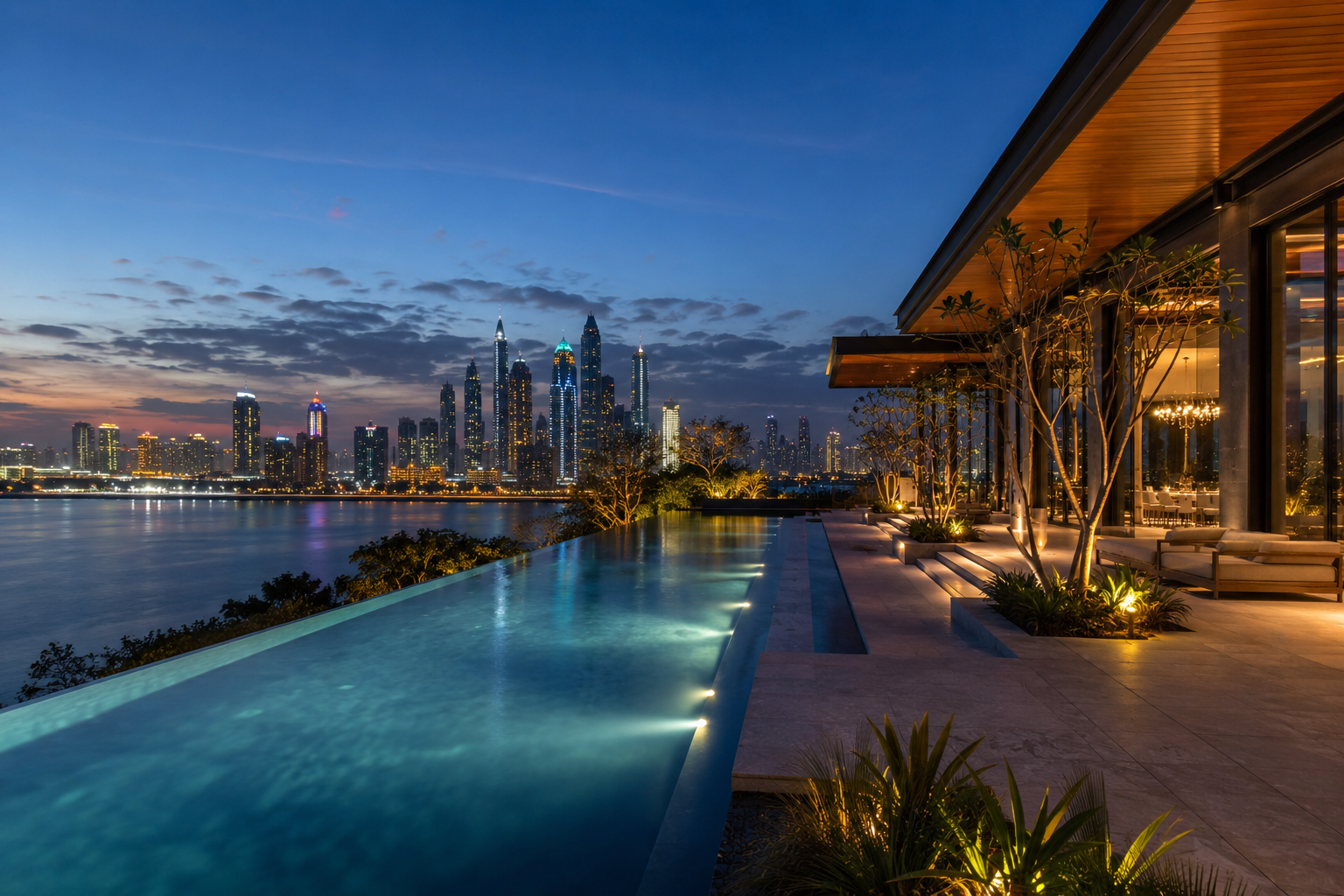
A conversation about a “home for health” is often heard as a conversation about costs. An extra budget line for biophilic design. A more expensive ventilation system. More complex lighting. We have different mathematics for you.
Longevity architecture is an investment with a measurable financial return. And the data behind that statement is academic, not marketing.
What the researchers say
- MIT Real Estate Innovation LabA study led by Dr Andrea Chegut covered 10 US cities, comparing certified “healthy” buildings with uncertified ones in the same locations. The finding: effective rents in healthy buildings are 4.4–7.7% higher per square metre. Not a hypothesis — market transactions.
- Cambridge University (Journal of Environmental Management, 2025)A stricter study controlling for age, location and building class confirmed the premium at 4.4–4.8% on rents. The effect holds regardless of market.
- Global Wellness Institute (review of 300+ studies)For residential wellness real estate in the upper price segment, the sales premium is 10–25%. Branded wellness residences (Six Senses, One&Only, Mandarin Oriental) — 20–35%.
- The Dubai marketLocal developers and brokers record premiums of up to 25–30% for integrated wellness concepts. This is a market observation rather than an academic study, but it is consistent with the global data.
The second layer: lower personal costs
Beyond asset appreciation, longevity architecture creates savings that are rarely counted:
- Health: direct savingsA person living amid good air, biophilic design and circadian lighting carries lower baseline inflammation, sleeps better and has more resilient immunity. That means fewer sick days, fewer medical visits, lower medication costs. In US corporate data, companies that improved office air quality recorded a 35% reduction in sick days.
- ProductivityHarvard’s COGfx study recorded a 101% rise in cognitive scores in a correctly engineered environment. If your working time is worth $500/hour and the “right” space makes you 20% more effective for two hours a day, that is $36,500 a year of additional economic effect. From light and air alone.
- The recovery zone: return on investmentA home infrared sauna costs $5,000–25,000. Regular spa visits run $200–500 per session, two to three times a week. The payback maths is transparent. A private flotation pool is a $20,000–50,000 investment against $100–200 for every public session.
The third layer: market growth
Wellness real estate is growing at 15–20% a year — far ahead of the conventional housing market (5–6%). Saudi Arabia grew from $200 million in 2017 to $28 billion by 2025 in this segment. The UAE — from $3.3 billion to $14.6 billion. Greece and Spain lead Europe on growth rates.
A buyer investing in longevity architecture today is entering a segment with a durable, long-term upward price trend.