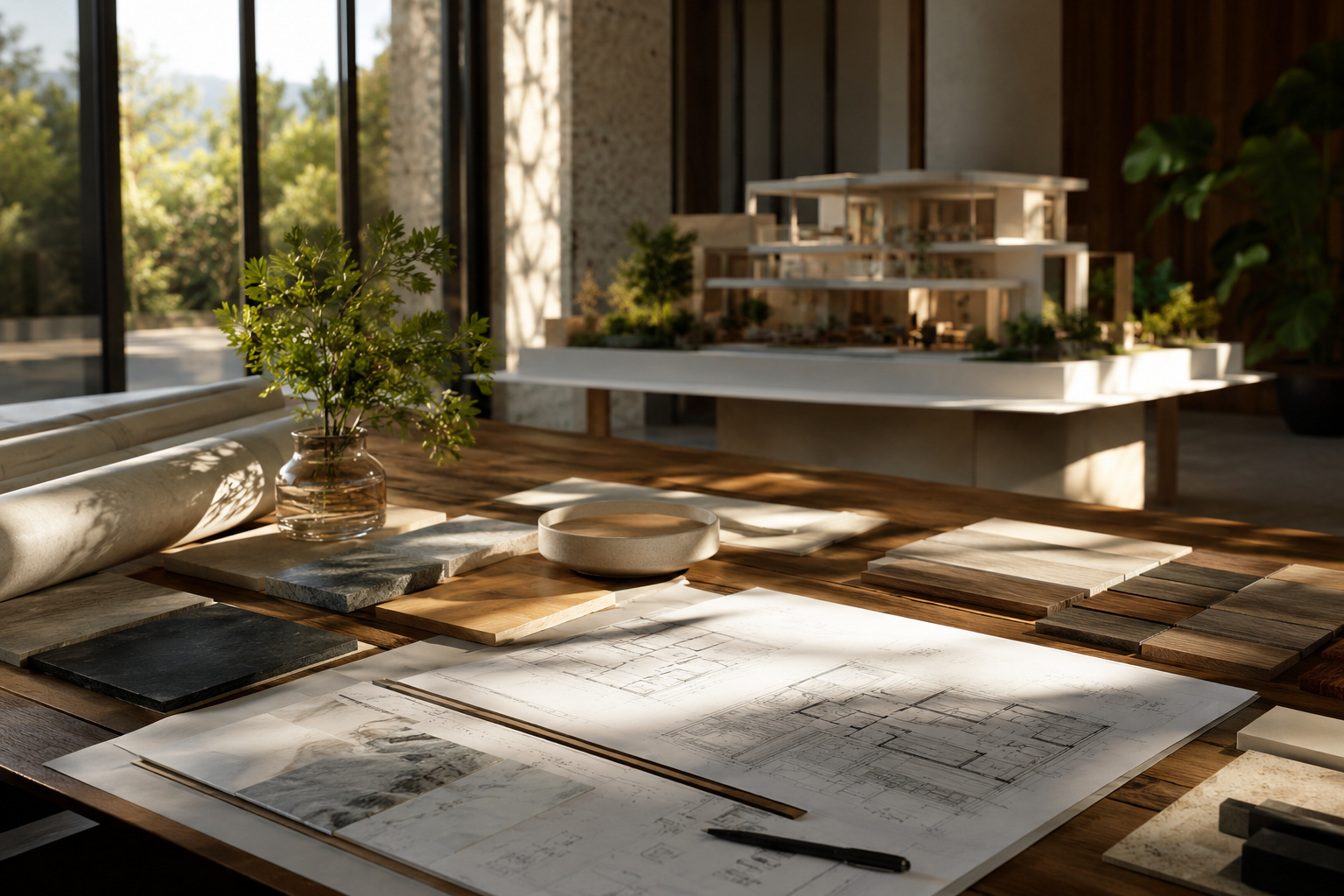
I am often asked: “What are you — an architect or a health specialist?” I answer: that is the wrong question. The gap between architecture and medicine is precisely the problem we solve. A home should know more about your body than most interior designers know about biology.
My name is Irina Filippova. I work at the intersection of longevity medicine, architecture and wellness technology. Here is what I see from inside this profession.
Where a longevity architect comes from
A classical architectural education teaches form, structure, aesthetics, codes. It does not teach chronobiology. It does not teach neuroendocrinology. It does not teach how excess CO₂ in a bedroom changes a person’s cognitive profile by morning. It does not teach that morning light falling at 35° to the horizon is optimal for triggering the circadian cortisol peak.
A medical education teaches all of that — but does not teach how to design space. The result is a gap.
A longevity architect is the person who closes that gap. Who understands that a building’s orientation is not only aesthetics and planning regulations, but a chronobiological protocol. That ceiling height is not only the cost of volume, but a neurobiological instrument. That the choice of a finishing material is not only aesthetics, but the biochemistry of volatile emissions.
The four sciences we bring together
- 1. Medicine and physiologyWe know how the glymphatic system works — the brain’s nightly “drainage” system, active only in deep sleep. That changes the acoustic and lighting requirements of a bedroom. We know how mitochondrial function responds to air quality — that changes the ventilation requirements. We know how neuroinflammation is linked to chronic noise stress — that changes the acoustic zoning.
- 2. Biology and ecologyBiophilic design is not “placing some plants.” It is understanding why certain patterns of nature lower cortisol. Why fractal-like surfaces bring the nervous system into soft fascination. Why the scent of certain wood resins changes heart rhythm. Biology gives us the mechanism; architecture gives it expression.
- 3. The physics of spaceAcoustics is physics that influences cortisol. Light spectrum is physics that governs melatonin. The electromagnetic field is physics that affects sleep quality (though the data here demands critical reading). Thermal physics defines the optimal temperatures of recovery zones. We work with these parameters systematically, not intuitively.
- 4. Vastu Shastra and spatial traditionsMillennia-old traditions of spatial design — Vastu in India, Feng Shui in China, sacred geometry in Mediterranean architecture — are a centuries-long experiment on enormous samples. Not everything in them is scientifically verified. But much coincides with what modern science is rediscovering. We do not ignore these traditions — we pass them through a critical lens and take what works.
What our work looks like in practice
When a client comes to us with a brief for a villa in the UAE, Greece or Bali, we do not start with form and style. We start with questions:
- Daily rhythmWhen do you wake, when do you sleep, how do you work, how do you recover?
- HealthAre there chronic conditions the home can support? Anxiety, sleep disturbance, chronic fatigue, pain?
- GoalsWhat do you want from life in this home ten years from now?
- FamilyEvery family member has distinct biological needs. Children need space that develops neural connections. Elderly parents need support for mobility and cognitive function.
Only after this do we move to the architectural concept. Because form must follow biology — not only function.
Why this market is growing
Wealthy clients around the world are beginning to understand: spending $5–10 million on a beautiful home that destroys health through bad air, wrong light and noise is a poor investment. The wellness real estate market grew from $225 billion in 2019 to more than $584 billion in 2024. And it keeps growing at 15–20% a year.
This is not just growth. It is a change of standard. In ten years, a home without longevity architecture will look as outdated as an office without internet looks today.
What we build
I Feel Spa International is a team of architects, longevity specialists and wellness technologists working under a single methodological code. We design private villas, residences and wellness facilities for clients in the UAE, Qatar, Saudi Arabia, Greece, Spain, Thailand, Bali, South Africa, Mauritius, the Seychelles and the USA.
Every project is a personal protocol. Because your biology is unique. And your home should know it.
Contact us to discuss your project.