Medical Clinics
Opening a Medical Clinic in UAE
Full-cycle medical & longevity clinic development — concept, design, equipment, business plan
Book a Consultation
Full-cycle medical & longevity clinic development — concept, design, equipment, business plan
Book a ConsultationAlmost every UAE clinic project we are asked to look at has been costed before the most consequential decision has been made. The UAE does not have a single healthcare regulator. Which one you fall under is set by where the clinic physically sits, and it changes the ownership structure, the practitioner licensing route, the facility standards you build to and the patients who can reach you.
Four routes, and they are not interchangeable:
A practitioner licensed in one of these is not automatically licensed in another. That single fact has stranded more UAE clinic launches than any construction problem we have seen.
Dubai Healthcare City is the option most often misunderstood, usually because it is presented as a shortcut. It is not a shortcut; it is a different business.
What genuinely changes inside the free zone is the ownership and tenancy structure, the regulator you answer to, and the concentration of medical neighbours — which cuts both ways, since being surrounded by clinics brings referral traffic and direct competition at the same time. What does not change is the clinical standard expected of you, and the fact that your practitioners must hold the licence that matches the jurisdiction.
Mainland has also changed. Full foreign ownership is now available for many mainland activities, which removed the single biggest historical reason to choose a free zone by default. The choice is now a commercial one about rent, catchment and neighbours, and it should be made on those terms rather than on an ownership rule that has moved on.
We model the same concept against more than one jurisdiction before recommending where it should sit. The answer is not the same for an aesthetics clinic and a longevity practice.
The UAE has the most developed aesthetic and longevity market in the region, and the most crowded. A clinic that opens without a defensible position in it competes on price, which is the one competition a new clinic cannot win.
The positions that are still open tend to be these:
Injectables, skin and preventive programmes bought repeatedly by people who live here. Lower ticket, far higher lifetime value, and it rewards location and convenience over spectacle.
Treatment packaged with accommodation and recovery. Needs a concierge and aftercare capability most clinics do not build, and it is won on reputation rather than rent.
A clinical offer inside a hospitality asset. Throughput follows occupancy, so the model has to survive the property's low season.
Executive screening and longevity programmes sold to employers. Predictable, non-seasonal, and the least contested of the four.
Which of these you choose determines the treatment menu, the technology and the layout. It is a concept decision, not a marketing decision, and it has to be made before the drawings.
We are based in Dubai, so the UAE is the market we are in rather than one we visit. What that means in practice:
They are separate licences from separate regulators. Dubai mainland clinics are licensed by the Dubai Health Authority, Abu Dhabi by the Department of Health, Dubai Healthcare City by its own free-zone regulator, and the northern emirates by the Ministry of Health and Prevention. Each has its own facility standards and its own practitioner register, so a doctor licensed in Dubai is not thereby licensed to practise in Abu Dhabi. Plan the jurisdiction before the fit-out, because it determines the standards you build to and the staff you can legally employ.
It is a commercial question now, not an ownership one. Full foreign ownership is available for many mainland activities, which removed the main historical reason to default to the free zone. What still differs is rent and tenancy structure, the regulator you answer to, and whether being surrounded by other clinics helps you or crowds you. A longevity practice that lives on referral often does well among medical neighbours; a convenience-led aesthetics clinic usually wants to be where its patients already are. We model the concept against both before recommending one.
Yes, through more than one structure, and the right one depends on the jurisdiction and the clinical activity rather than on a general rule. Free zones have long permitted full foreign ownership, and mainland rules have since widened considerably. What does not change is that the clinic must have appropriately licensed clinical leadership and that the facility licence sits with the clinic. We confirm the structure per project with your legal adviser rather than assuming the answer.
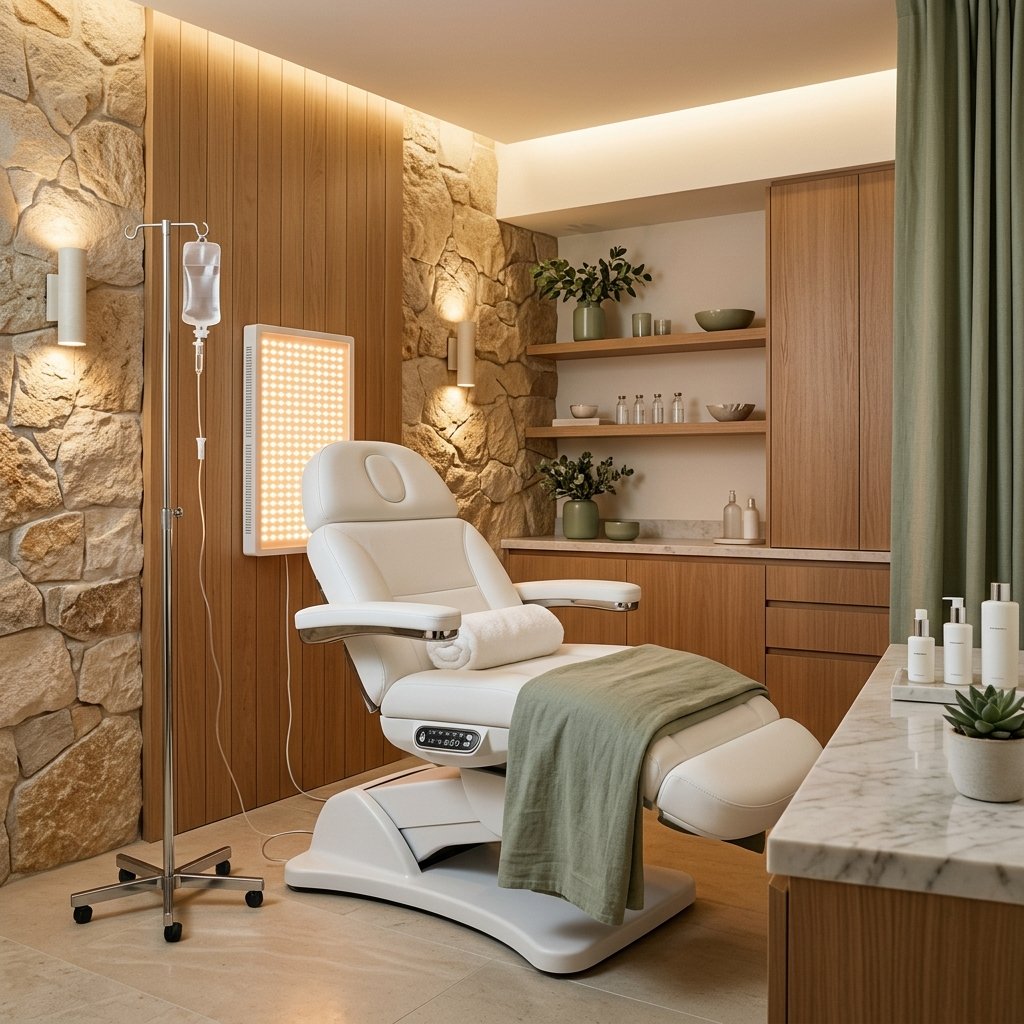
Yes, direct from our manufacturer partners rather than through a reseller, and we specify it as part of the concept rather than after the room exists. A longevity and medical-wellness clinic typically combines diagnostics, IV and recovery therapy and technology such as far-infrared, cryotherapy and recovery systems. Device registration and customs clearance can be arranged where local law allows, which matters because an unregistered device is an expensive object in a locked room.