Why Your Hotel Spa Layout Decides Profit
A hotel spa layout translates the vision into a revenue model. The wrong floor plan — too many treatment rooms, too few wet areas, an undersized changing room, no retail zone — can condemn a spa to losses regardless of its design quality. I Feel Spa International brings a data-driven approach to spa space planning: we start with projected occupancy, average treatment duration and target RevPAM, then work backwards to the optimal room configuration and floor plan.
Space Allocation Benchmarks
- Treatment Rooms: 25–35 m² per room including en-suite. Standard 5-star: 1 room per 15–20 keys
- Changing Facilities: minimum 1 m² per peak occupancy guest — most often undersized
- Aquathermal Area: 150 m² minimum for basic thermal suite; 400–800 m² for premium journey
- Relaxation Lounge: minimum 1 bed per treatment room, aim for 1.5:1 ratio
- Reception / Retail: minimum 20 m² reception, 15–30 m² retail
- Back of House: 25–30% of total spa area for staff, storage, laundry, plant
Illustrative gross-area split for a mid-size 5★ hotel spa. Exact ratios depend on positioning and day-use strategy.
Common Space Planning Failures
- Allocating space before fixing the guest journey
- Underestimating peak capacity in the wet area
- No flexibility for room conversion or expansion
- Separating male/female zones so far apart mixed-use programming is impossible
- Back of house as an afterthought — inadequate staff areas increase turnover
From Floor Plan to Budget
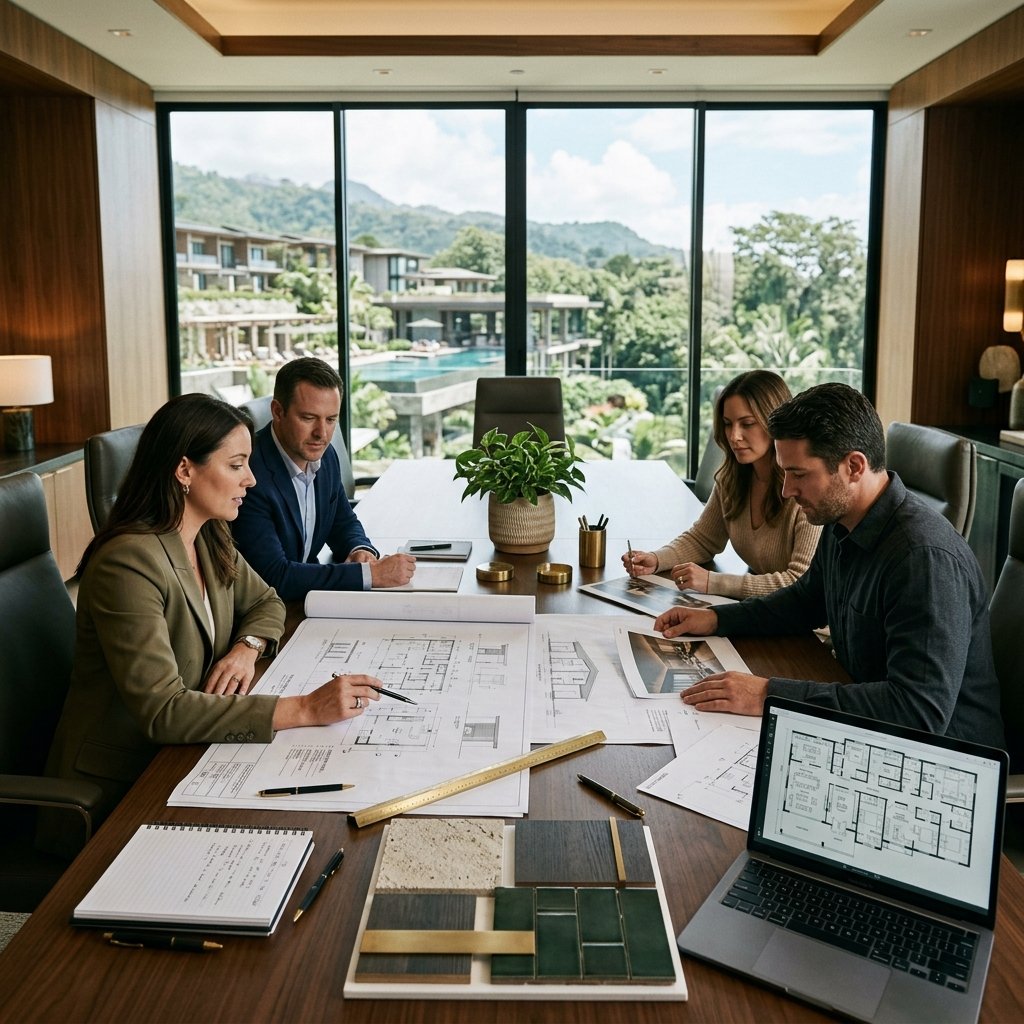
A hotel spa floor plan is only as good as the budget behind it. Once the layout and zoning are fixed, every square metre carries a fit-out cost — aquathermal areas and treatment rooms are far more capital-intensive than lounges or retail. We translate the space plan directly into a spa budget plan, so the floor plan you approve is the one you can actually build. See our spa business plan and spa consulting services for the full financial model.
The Six Zones of a Hotel Spa Floor Plan
An efficient hotel spa floor plan organises the guest journey as a one-way flow — arrival, changing, wet and thermal, treatment, then relaxation — while keeping back-of-house circulation completely separate. Get the sequence right and guests move through the spa intuitively; get it wrong and you create bottlenecks at the changing rooms and cross-traffic between guests and staff.
Spa Layout by Facility Size
The right spa layout depends first on how much space you have. These are the practical thresholds we use when we plan a hotel or resort spa as part of a full-cycle spa development project:
| Facility size | Total spa area | What the layout supports |
|---|---|---|
| Boutique | 250–400 m² | 3–5 treatment rooms, a compact thermal suite and a small relaxation lounge. Beauty-led. |
| Standard 5-star | 400–800 m² | 6–10 treatment rooms, a full aquathermal suite, dedicated relaxation and retail. |
| Premium resort | 800–1,500 m² | 10–16 treatment rooms, an extended thermal journey, couples suites and membership potential. |
| Flagship destination | 1,500 m²+ | 16+ rooms, a signature aquathermal journey, hydrotherapy, fitness and medical-wellness integration. |
Planning the Aquathermal Zone
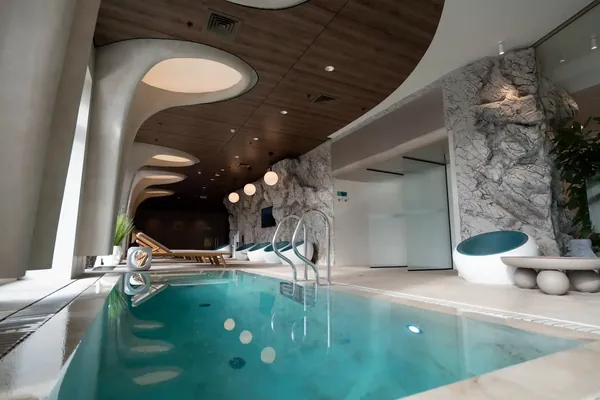
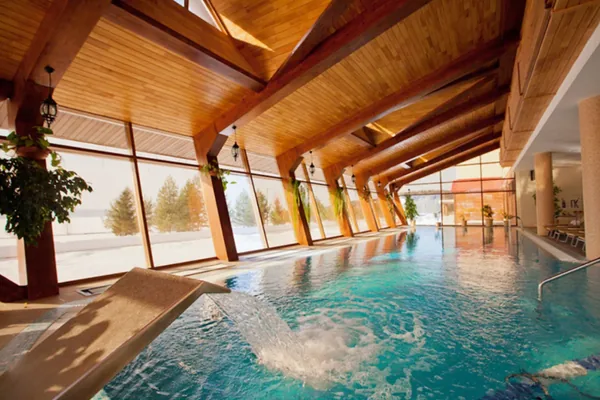
The aquathermal zone — pools, thermal cabins, experience showers and heated loungers — is the most capital-intensive and technically demanding part of any spa floor plan, and the hardest to change once built. It needs dedicated plant space, waterproofing and drainage designed in from the first sketch, so we size and locate it before anything else. See our aquathermal complex design and aquathermal journey design services.