Hotel Spa Design
Spa Interior Design Firm & Consultants for Hotels, Resorts & Spa Operators
Sensory architecture across five dimensions
Request an Interior Design Consultation
Sensory architecture across five dimensions
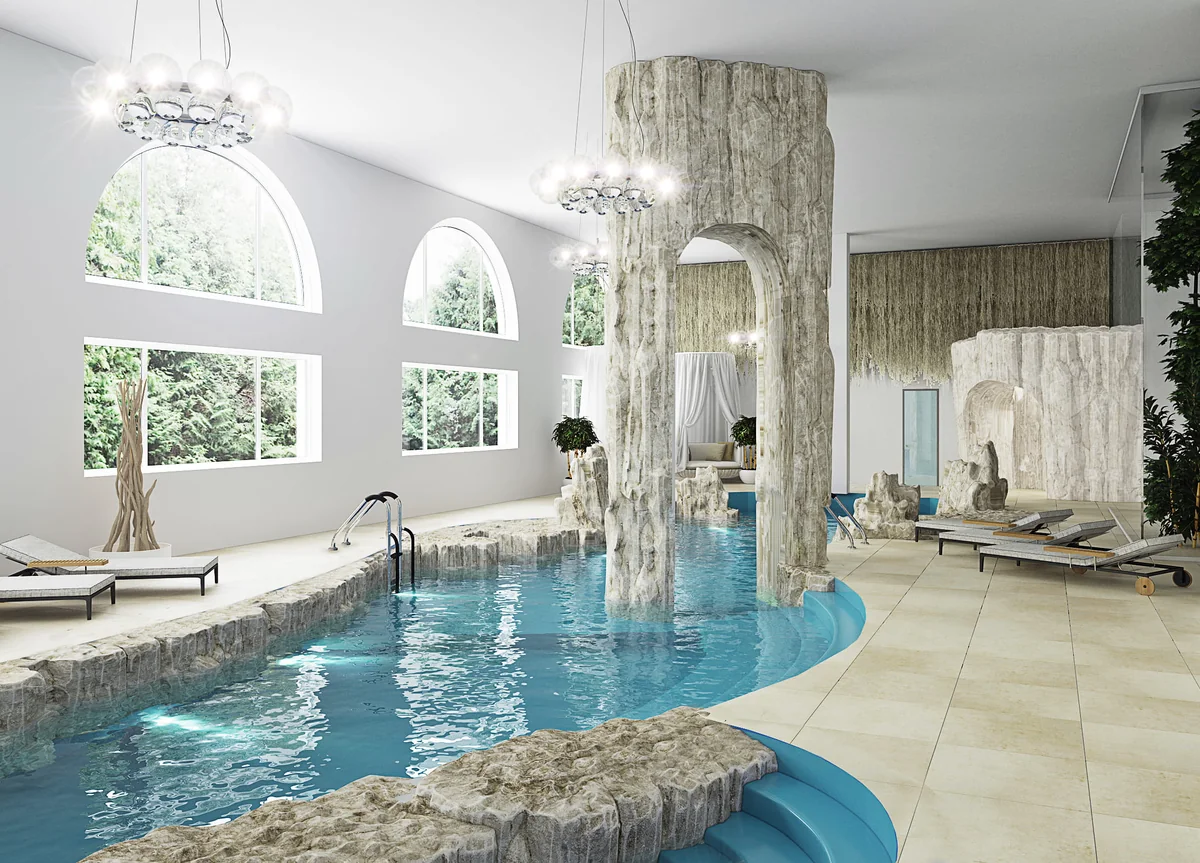
Request an Interior Design ConsultationA hotel bedroom is a dry room held at a stable temperature. A spa is not. The same marble that performs perfectly in a lobby becomes a slip risk wet, the same decorative plaster blisters at high humidity, and the same joinery swells and splits a season after handover.
Spa interior design is specification under load. Every surface is chosen against water, heat, chemicals and daily deep cleaning — and only then for how it looks.
Our interior design work is for commercial wellness facilities — hotel and resort spas, and standalone spa and wellness operators. We do not take on general residential interior design; villas, homes and apartments are handled by our sister company, Wellness Design & Device.
The governing rule is performance first, appearance second. A material that cannot hold its finish under the conditions of the room is not a cheaper option — it is a deferred replacement.
The question to put to a supplier is not whether a material is “used in spas”. It is the slip rating, the water-absorption figure, and what the finish looks like after a year of the cleaning chemicals your operator will actually use.

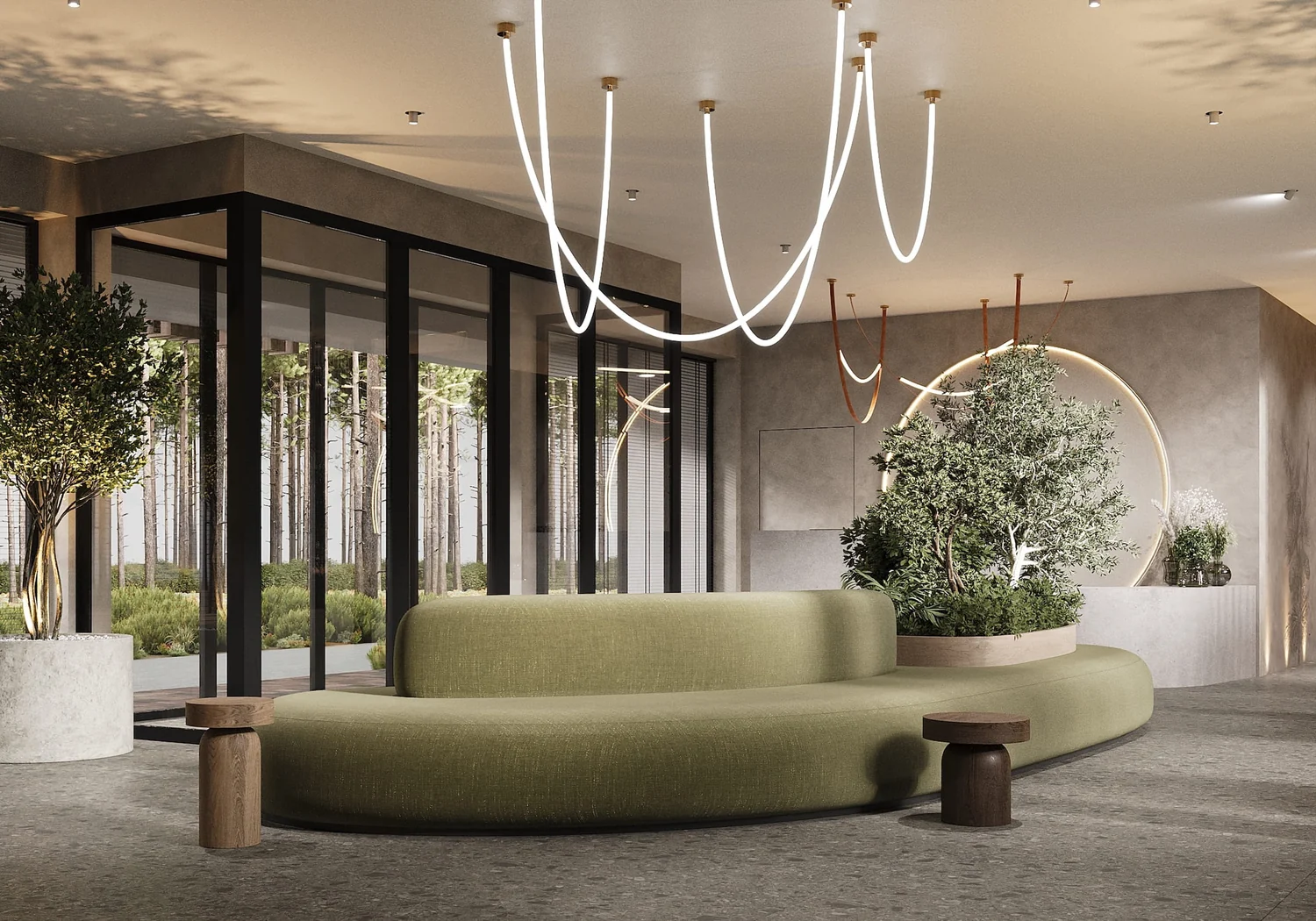
Hotel and resort facilities at three scales — the same material, lighting and acoustic discipline applied to very different buildings.
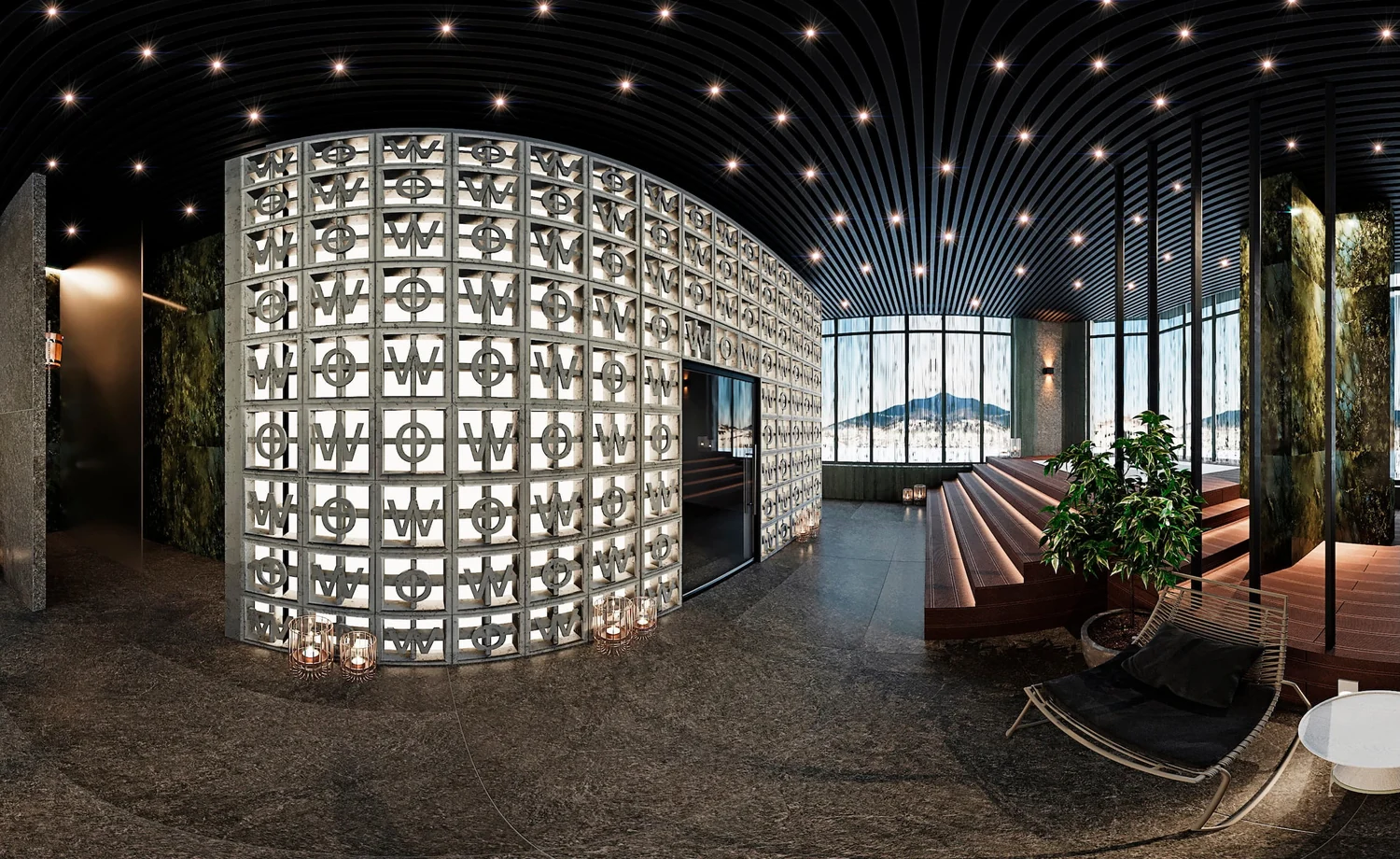
Lighting in a spa is a sequence, not a scheme. It is tied to the guest journey, and the levels have to fall in order:
A relaxation room brighter than the corridor leading into it reads as a waiting area, whatever the furniture cost. The order matters more than any single fitting.
Acoustic separation is a build-up, not a finish. It is decided in the construction detail, and it cannot be corrected later with soft furnishings.
A guest paying a premium rate for ninety minutes can hear the conversation next door, or the plant behind the wall, and the treatment is worth less than it cost to deliver. Acoustic separation is the least visible line in a specification and among the most expensive to retrofit.
We will not quote a cost per square metre before seeing the building and the brief. The same floor area varies several times over depending on what sits inside it. What moves the number:
The useful moment for a cost conversation is while the specification can still absorb the budget. After the drawings are issued, the only lever left is cutting quality.
A spa interior is refurbished on a long cycle. That single fact should govern the material and lighting language, because anything tied to a season will be carried for years after it stops reading as current.
And specify for the people who clean it. Finishes that survive daily deep cleaning and a full bather load keep looking new; finishes that do not get patched, then replaced, and then blamed on the designer.
Full services including concept boards, material specifications, FF&E schedules, lighting design, and design review during construction. We can also work alongside an existing hotel interior designer as a spa specialist.
Yes. We provide full design documentation any qualified contractor can execute, plus remote design review to ensure compliance.
No. Our interior design work is for commercial wellness facilities — hotel and resort spas, and standalone spa and wellness operators. Villas, homes and apartments are handled by our sister company, Wellness Design & Device, a Dubai studio built for exactly that work.
Yes. We frequently act as the spa specialist within a wider design team, providing the wet-zone specification, lighting and acoustic requirements and the FF&E schedule that the lead designer integrates into the overall scheme.
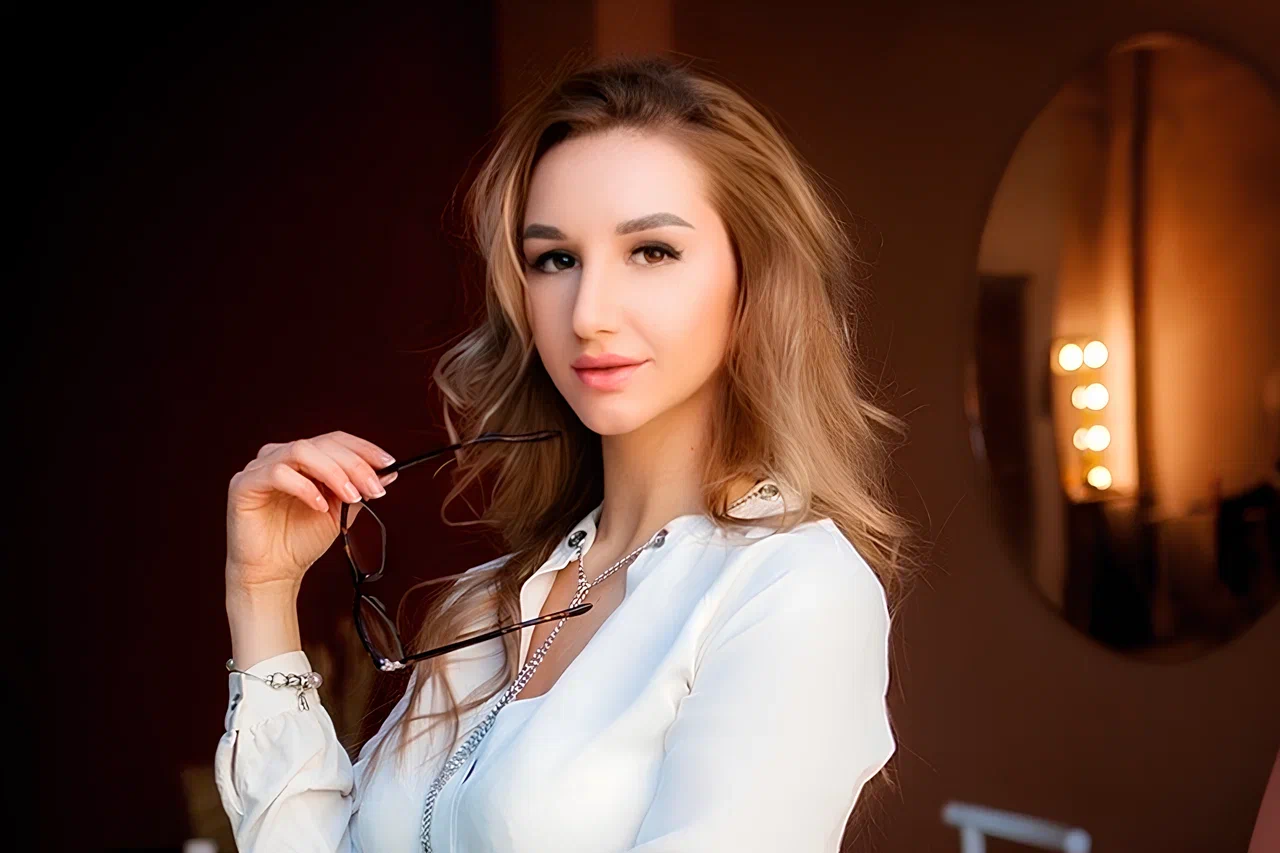 Irina Filippova
Chief Architect, I Feel Spa International
Irina Filippova
Chief Architect, I Feel Spa International
Leads interior design and architectural consultancy across I Feel Spa International’s global portfolio. Creator of award-winning spa interior concepts across Russia, the CIS and the Middle East.